POSTGRADUATE PROGRAMME DETAIL
Discover postgraduate programmes offered by UMSFLEC in one easy-to-browse platform. Find your preferred programme, explore key information, download brochures, and apply online with ease — all in one place to support your postgraduate journey with Us.
Intake
February / September
Duration(s)
Full-time: 1.5 Years (3 Semester)
Part-time: 2.5 years (4 Semester)
Programme Fees
Full-time: RM 18,805
Part-time: RM 20,080
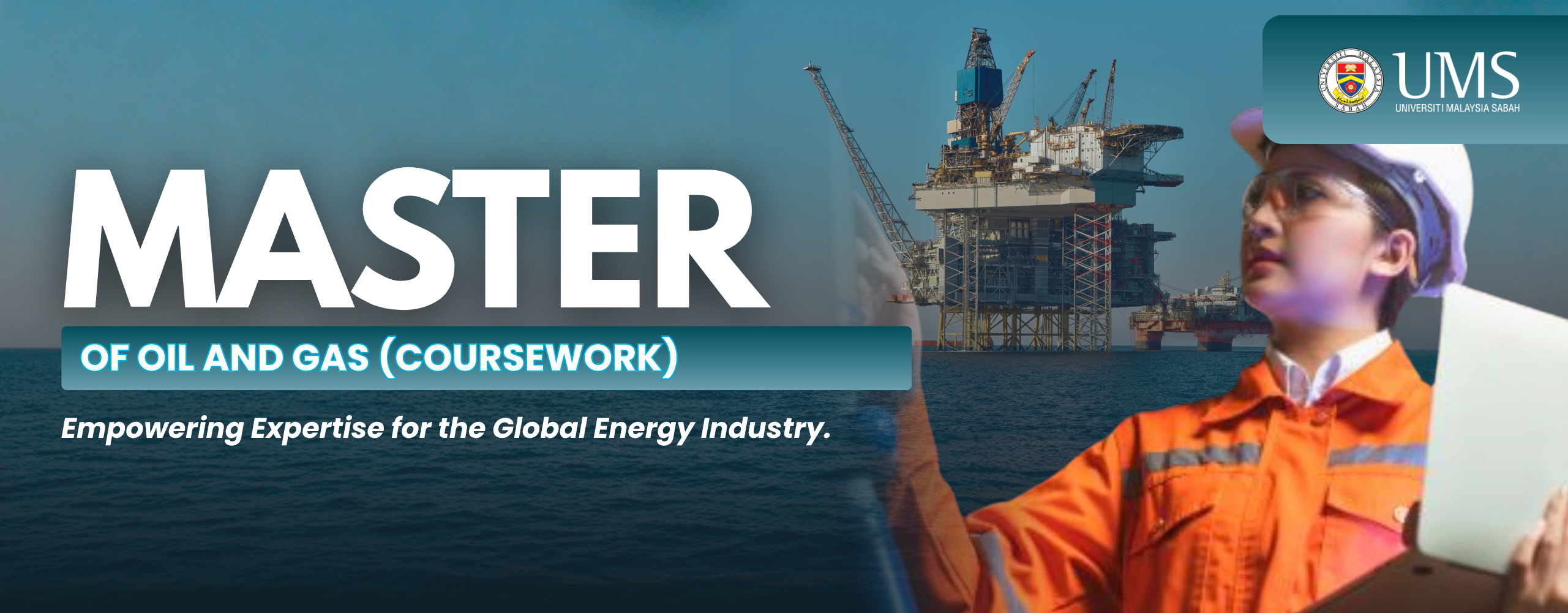
The Master of Oil & Gas Engineering programme at Universiti Malaysia Sabah (UMS) is designed to provide advanced technical knowledge and professional skills in petroleum and natural gas engineering. This programme equips students with expertise in upstream and downstream processes, reservoir engineering, drilling, production operations, and energy management.
Students will gain a strong foundation in engineering principles, applied research, and industry best practices, enabling them to address challenges in oil and gas exploration, production, and management. The programme emphasizes safety, sustainability, and innovation in the energy sector.
This programme is suitable for engineering graduates, professionals, and practitioners seeking to enhance their technical competencies or pursue research and leadership roles in the oil and gas industry.
Programme Objectives & Impact
The programme aims to:
• Develop advanced technical knowledge in petroleum and natural gas engineering.
• Enhance analytical and problem-solving skills in upstream and downstream operations.
• Equip students with research and project management capabilities.
• Promote sustainable, safe, and innovative engineering practices in the energy sector.
• Prepare graduates for leadership and specialist roles in oil and gas industries.
Programme Impact
Graduates of this programme will be able to:
• Apply advanced engineering principles in petroleum and natural gas projects.
• Solve complex technical problems in exploration, drilling, production, and processing.
• Design and manage oil and gas operations in line with industry standards.
• Contribute to sustainable and safe energy practices.
• Advance careers in engineering consultancy, energy companies, and research organizations.
• Pursue further studies such as PhD in petroleum engineering or related fields.
Teaching Approach
The programme adopts a research-based and industry-oriented learning approach. Teaching methods include:
• Advanced lectures and technical seminars
• Computational Software and Simulation Exercises
• Case studies and real-world project analysis
• Research-based assignments and thesis work
• Industry exposure and professional workshops
This approach ensures graduates acquire both theoretical knowledge and practical skills relevant to the oil and gas sector.